

New to Homeschooling? You Can Do This.

If you’re wondering whether you’re doing enough, you’re not alone. Almost every parent asks that in the first few weeks.

Our lessons are made by a real classroom teacher to be open and go: print, read, teach. Each one shows the skill level, how long it takes and exactly what your child will learn, so you always know what comes next.

Mechelle LaLanne, Mrs. LaLanne

Mechelle LaLanne, “Mrs. LaLanne”

Meet Mrs. LaLanne

Hi, I’m Mechelle LaLanne. Around here I’m Mrs. LaLanne. I’m a working classroom teacher.

I made these lessons for families like yours. Every step is written out so any parent can pick them up and teach with confidence. No teaching degree required.

Read more about me

Your First Week, Step by Step

You don’t need to plan the whole year tonight. Here’s a gentle way to get through week one.

1. Pick one skill level and one subject

Start small. One subject is plenty for your first week. Not sure where to begin? See “Which skill level should I start with?” below.

2. Print the week’s lessons

Print everything for the week at once and keep it in a folder. The teaching steps are written out for you, so there’s nothing to prepare.

3. Set up a learning corner

A table, good light, and pencils and crayons within reach. It doesn’t need to be picture-perfect. It just helps to use the same spot each day.

4. Teach a little each day

Short and steady beats long and stressful. Stop while it’s still going well, and pick up again tomorrow.

5. Record grades in the gradebook

After a practice page, add your child’s grade under My Account > Grades. Whenever you need it, print a report card from the Report Card page for your records.

That’s it. If week one feels a little wobbly, that’s normal. Week two is easier.
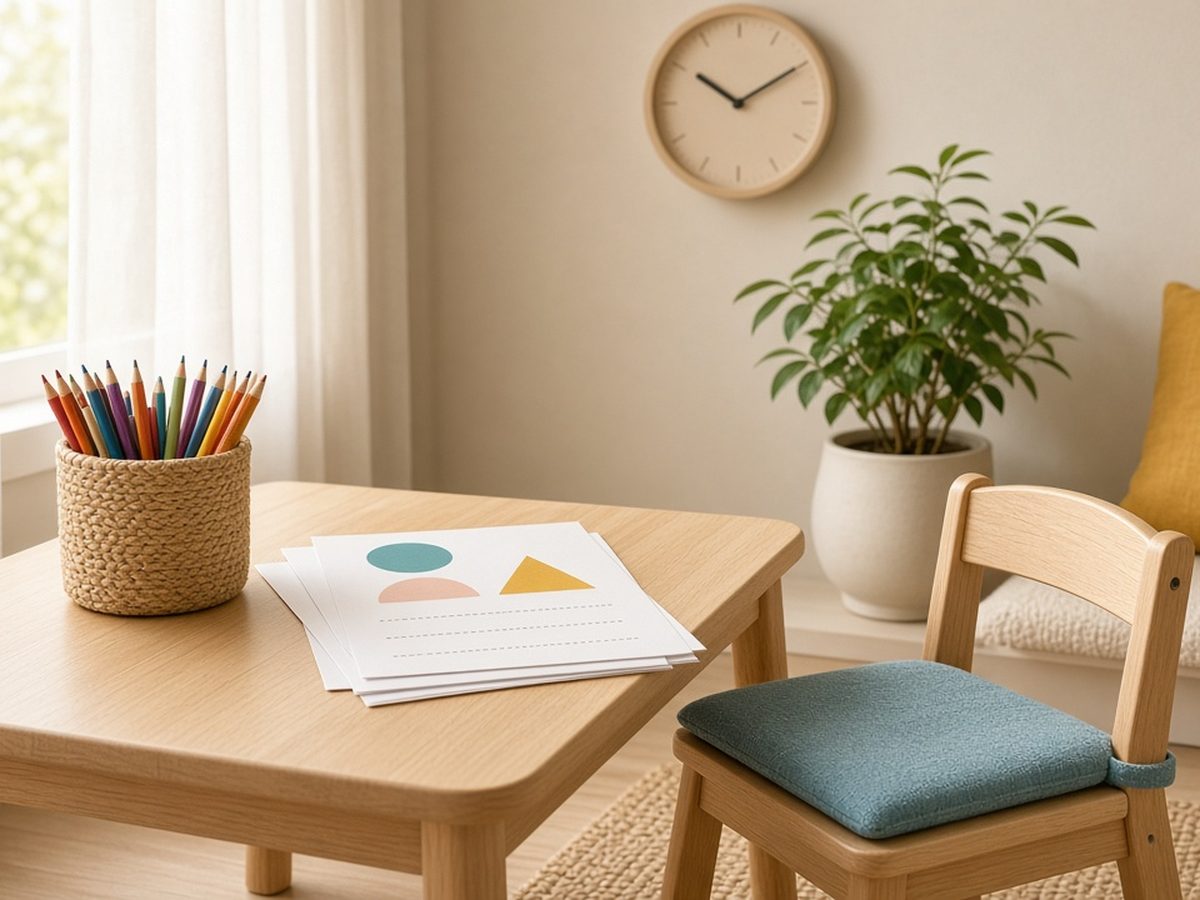
A cozy home learning corner with a small table, pencils and worksheets

How Our Lessons Work

Open book icon

Open and Go

Every lesson is written out step by step. Print it, read it, teach it. No prep and no guesswork.
Checklist and clock icon

Clear Goals and Times

Each lesson lists the skill level, how long it takes and what your child will be able to do by the end.

Magnifying glass over a page icon

See Inside First

Look through preview pages so you know exactly what you’re getting before you buy.

Report card icon

Track Progress

Record grades in the built-in gradebook and print a report card anytime. It’s peace of mind and an easy way to keep records.

What You’ll Need

Good news: you probably have most of this already. There’s no special equipment and no teacher’s manual to buy.

  • A printer
  • Printer paper
  • Pencils and crayons
  • A quiet table or learning corner
  • A folder to keep finished work (handy for records)

Common Worries

If any of these are on your mind, you’re in good company.

Yes. You know your child better than anyone, and that matters more than a teaching degree. Each lesson is written out step by step, so you can read along as you teach. If you can follow a recipe, you can teach these lessons.

Every lesson lists its own time estimate, so you can see how a week will look before you start. With little ones, shorter sessions with a break in between often work best.

Every lesson lists its skill level and learning goals as simple can-do statements, like “I can tell time to the quarter hour.” When your child can do those things, you know the lesson did its job.

Recording grades in the gradebook lets you see progress over weeks and months, not just one day at a time.

That happens, and it’s okay. Every child learns differently. Try slowing down, repeating a page or stepping back a skill level.

If a lesson still isn’t right for your family, we want to make it right. Just contact us.

It depends on where you live. Homeschool requirements vary by state, so please check your state’s rules.

Whatever your state asks for, the built-in gradebook (My Account > Grades) and the printable Report Card page make record keeping much easier.

Our lessons are organized into five skill levels: Foundations, Building Skills, Growing Fluency, Advancing and Mastery. Look at the preview pages for the level that seems closest to where your child is now. If it looks too easy or too hard, move up or down. It’s normal for a child to be at different skill levels in different subjects.

Still not sure? Send us a note and we’ll help you choose.

A parent and two kids celebrating a finished lesson with a high five

You Don’t Have to Have It All Figured Out

Start with one lesson. We’ll be right here to help along the way.